If you have ever lived in a New York apartment or run a hotel floor here, you already know these PTAC units don't get an easy life. The concrete holds onto summer heat and throws it right back at the building, and winter has a habit of flipping moods overnight. So the unit is basically working overtime, all year, with barely a breather. That's why the moment one starts rattling, breathing out warm air instead of cold, or just sits there dead, nobody's googling PTAC repair in NYC next week. They are doing it within the hour, usually with a fan pointed at their face while they wait.
Why PTAC Units Fail So Often in This City?
A PTAC unit is basically an entire cooling system squeezed into a box small enough to fit under a window, which is exactly why so many NYC buildings rely on them when there's no room for anything bigger. But that convenience comes with a catch. Everything inside is packed in tight, wire next to the coil next to the motor, with no real breathing room. And when a unit is running almost nonstop the way it does in this city, that tight squeeze starts showing wear a lot sooner than anyone would like. Some of the most common factors why a PTAC unit fails are as follows:
- Dirty or clogged filters that choke airflow
- Refrigerant leaks that quietly drain cooling power
- Worn-out capacitors, usually the first thing to go after several summers of heavy use
- Drainage blockages, which cause water pooling and eventually trip the unit's safety shutoff
- Electrical wear, especially in older buildings where wiring hasn't kept pace with newer units
The Real Cost of Waiting
Most property managers find this out the hard way. A PTAC unit doesn't just quit one afternoon out of nowhere. It struggles for weeks before that, running longer than it should, pulling more power than usual, quietly pushing parts past what they were ever meant to handle. Nobody notices because the room still feels cool enough. But by the time it finally gives out, it's not a small fix anymore, and the bill shows exactly how much that waiting cost.
Waring Sign | Likely Cause | What Happens If Ignored |
Short cycling | Faulty thermostat or sensor | Compressor burnout |
Warm air only | Low refrigerant or blocked coil | Full system failure |
Loud grinding or rattling | Worn fan motor or bearings | Motor replacement needed |
Water pooling under unit | Clogged drain line | Water damage, mold risk |
Unit won't power on | Electrical fault or capacitor failure | Complete unit replacement |
What Actually Happens During a Proper Repair Visit?
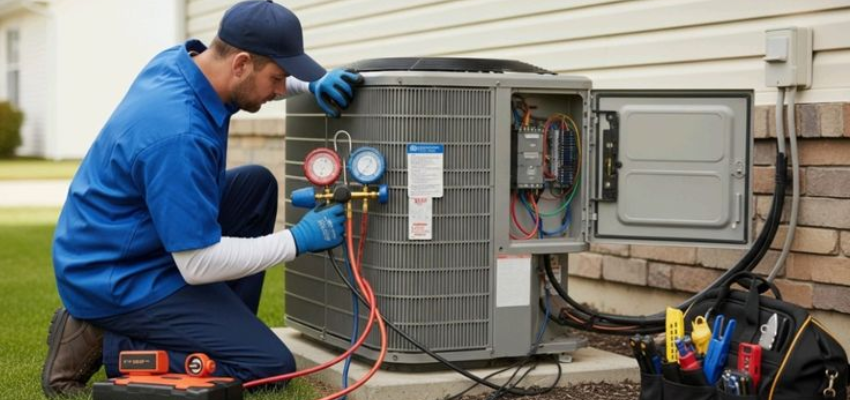
A technician who has done this for years doesn't start by guessing. The process is usually pretty straightforward:
- The unit gets inspected from the outside in, checking airflow, drainage, and any obvious wear
- Electrical components are tested individually rather than just swapped out on a hunch
- Refrigerant levels are checked if the unit isn't cooling properly
- Filters and coils are cleaned, since a surprising number of "broken" units are just dirty
- A final run-through confirms the fix holds under normal operating load
Brands Matter More Than People Think
Honestly, the brand of PTAC matters more than most people think. Amana acts differently than Carrier. Daikin has its own set of headaches. Islandaire too. Parts are easier to find for some than others, and the ways they tend to fail are not the same either. A technician who has already pulled apart a dozen Islandaire units knows exactly where to look the second he opens the panel. Somebody who's never touched that brand before is basically starting cold, poking around, testing things one by one. And that's the difference between a fifteen minute fix and an hour of guesswork.
Maintenance Is Cheaper Than Panic
Want to know the easiest way to skip an emergency PTAC repair in NYC altogether? Get someone in there before the weather turns. That's really it. The visit itself doesn't take long, way less than people assume, and it's usually enough to catch the stuff that's easy to miss on your own, a capacitor that's about to give out, a coil that's collecting more dust than it should. Catch that now and nobody's apartment turns into a greenhouse come August.
And if you are the one managing a whole building, or a handful of them, this isn't really about comfort anymore. It's about your afternoon. Because one skipped check now can easily turn into three complaint calls back to back later, and suddenly the whole day's gone.
When It's Time to Call Someone
Short-cycling, warm air, strange noises, none of these fix themselves, and waiting rarely makes the repair cheaper. If a unit is already showing signs of trouble, getting ahead of it with proper PTAC repair now is almost always less disruptive than dealing with a full breakdown later, especially in a city where summers don't wait for anyone.